1 Nov 2026
Unpacking How App Usage Patterns Shape Tiered Payout Structures in Online Platforms
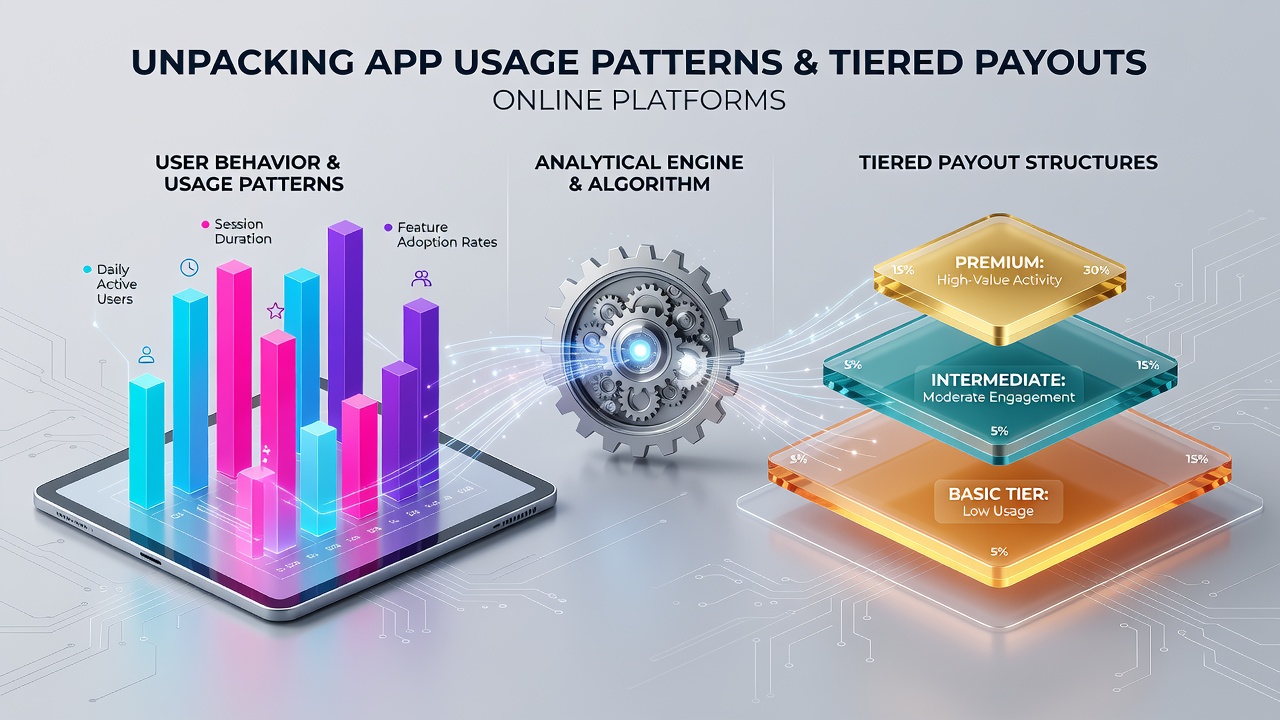
App usage patterns drive the architecture of tiered payout structures across digital platforms, where metrics such as session duration, feature interaction frequency, and retention streaks determine eligibility for escalating reward levels, and data from November 2026 shows platforms refining these models through real-time analytics to align compensation with observed behaviors.
Researchers at institutions tracking digital economies note that daily active users who engage with core features for extended periods often ascend tiers faster than sporadic visitors, since algorithms prioritize consistent input when calculating payout multipliers. This approach creates a feedback loop where higher tiers unlock enhanced rates, yet access remains contingent on sustained patterns that platforms monitor through embedded tracking tools.
Core Metrics Influencing Tier Placement
Session length stands out as a primary indicator, with platforms segmenting users into brackets based on average minutes per interaction, while frequency of returns within a seven-day window further refines those categories. Engagement depth adds another layer, as clicks on advanced tools or content sharing correlate with accelerated progression, according to aggregated findings from mobile analytics providers. Those patterns feed directly into automated systems that adjust payout thresholds monthly, ensuring structures reflect evolving user habits rather than static rules.
Geographic variations appear in how these metrics apply, since regulatory environments in regions like the European Union emphasize transparency in data usage for tier decisions, whereas North American platforms focus more on performance benchmarks drawn from large-scale user cohorts. A report issued by Innovation, Science and Economic Development Canada highlights how Canadian digital services link usage streaks to bonus allocations in loyalty programs, revealing correlations between prolonged app residency and elevated compensation brackets.
Algorithmic Adjustments and Data Integration
Platforms integrate machine learning models that process usage signals in batches, updating tier assignments weekly or bi-weekly depending on volume, and this process allows for dynamic scaling where high-engagement clusters receive proportional increases in payout velocity. Observers note that cross-feature usage, such as combining social interactions with transactional elements, often signals deeper commitment and triggers tier upgrades without manual intervention. The result is a system where payout structures evolve alongside collective behavior shifts, maintaining equilibrium between user effort and platform returns.
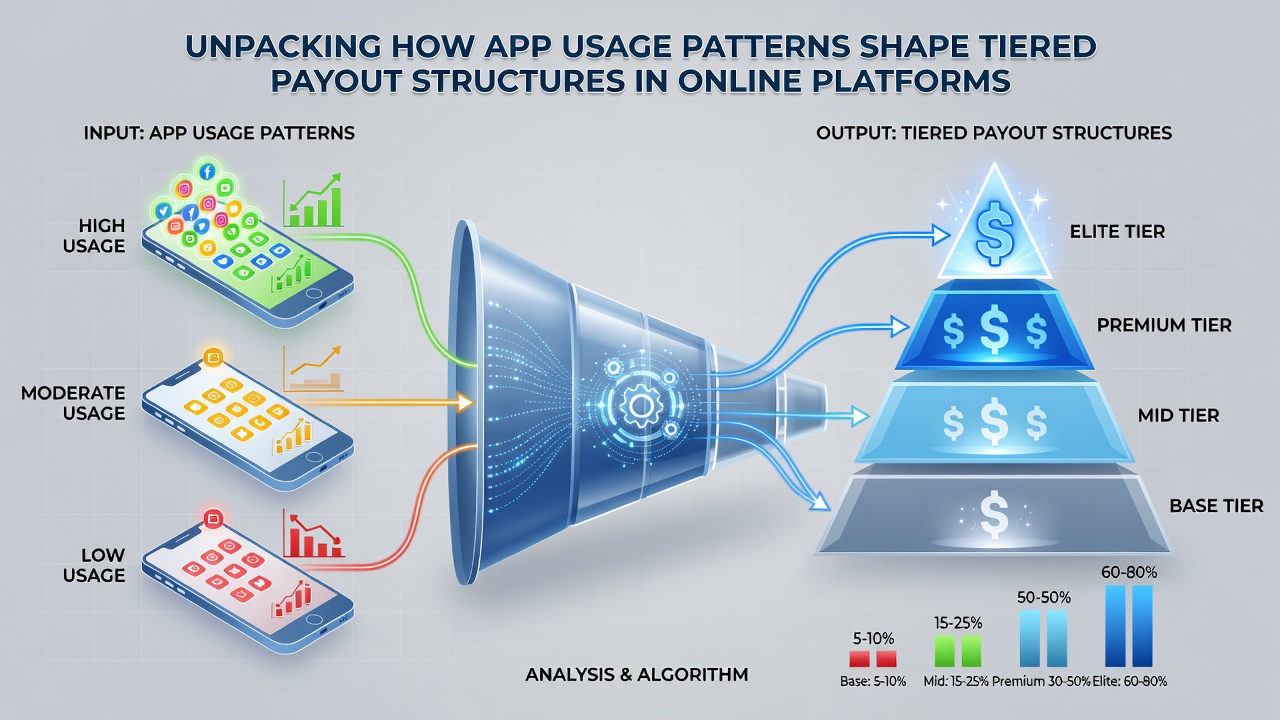
Evidence from university-led studies, including work at the Oxford Internet Institute, demonstrates that platforms testing variable weighting for metrics like push notification responses achieve more precise tier distributions, reducing churn among mid-level users who might otherwise plateau. These adjustments rely on anonymized datasets that capture temporal patterns, such as peak activity hours, which inform whether certain cohorts qualify for accelerated pathways or remain in entry-level bands.
Case Examples from Platform Implementations
One fitness tracking service examined by industry analysts applied usage-based tiers where participants logging consecutive workouts advanced to premium reward rates, with data indicating that users exceeding fifteen sessions monthly saw payout values double compared to baseline groups. Similarly, content creation apps have calibrated structures around upload consistency and audience interaction metrics, granting higher revenue shares to creators whose patterns exceed predefined thresholds. These implementations show how granular tracking translates behavioral data into tangible compensation differences across user segments.
Regulatory scrutiny in Australia has prompted platforms to disclose how usage metrics feed into tier calculations, as outlined in guidance from the Australian Competition and Consumer Commission, ensuring users receive clear explanations of progression criteria. Such transparency measures address potential discrepancies where inconsistent engagement leads to stalled advancement, prompting developers to refine algorithms for broader accessibility while preserving incentives tied to high-activity patterns.
Emerging Trends Observed in Late 2026
By November 2026, integration of predictive analytics allowed platforms to forecast tier eligibility based on early usage signals, enabling proactive notifications that encourage behaviors aligned with higher brackets. Cross-platform data sharing, where permitted under privacy frameworks, further refines these predictions by incorporating external app interactions that correlate with in-app performance. This evolution underscores the shift toward interconnected systems that treat usage patterns as dynamic inputs rather than isolated variables.
Industry reports continue to track how these mechanisms affect overall ecosystem health, with emphasis on balancing aggressive tier climbs against sustainable engagement rates that prevent burnout among dedicated users. Patterns emerging from aggregated datasets reveal regional differences in optimal session thresholds, guiding localized adjustments to payout formulas.
Conclusion
App usage patterns continue to define the contours of tiered payout structures, as platforms refine algorithms to match compensation with measurable engagement signals across diverse user bases. Data integration from multiple sources supports ongoing calibration, while external regulatory influences shape disclosure practices that maintain operational clarity. These developments reflect broader trends in digital economies where behavioral inputs directly inform economic outcomes for participants navigating online platforms.