18 Oct 2026
Shifting Sands in Incentive Design: How Behavioral Data Reshapes Online Cash Offer Structures

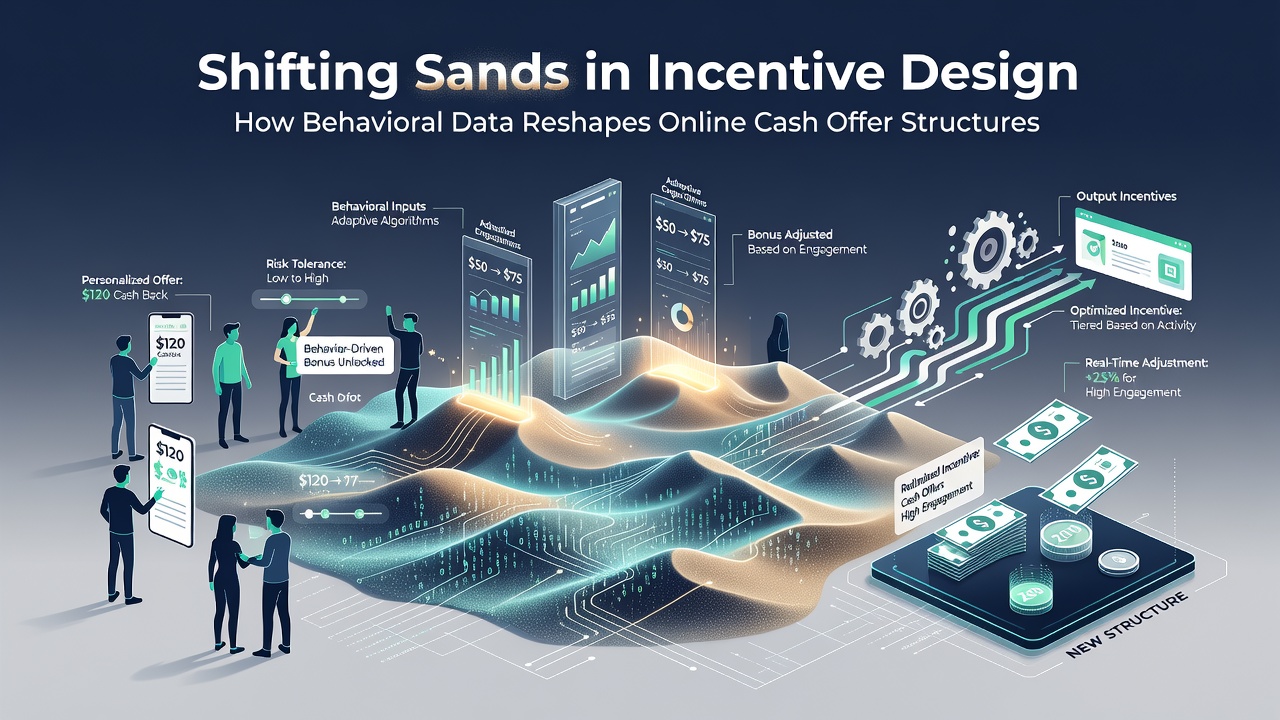
Behavioral data now drives adjustments in online cash offer structures across digital platforms, with companies tracking user interactions to refine reward timing, amounts, and conditions. Data from user sessions reveals patterns in engagement duration, redemption frequency, and response to varying incentive levels, which then inform modifications to cash bonus frameworks. Researchers at institutions studying digital economies have documented how these shifts occur in response to aggregated metrics rather than fixed schedules.
Data Collection Mechanisms in Modern Platforms
Platforms gather behavioral signals through clickstream analysis, session lengths, and conversion paths while users navigate reward interfaces. These inputs feed into algorithms that predict optimal offer presentation, such as delivering cash incentives after specific activity thresholds or during peak interaction windows. Observers note that in October 2026, several platforms updated their systems to incorporate real-time data streams from mobile applications, allowing for dynamic recalibration of offer values based on individual usage histories rather than broad demographic categories.
Studies from academic centers focused on computational social science indicate that integration of machine learning models helps identify segments where cash offers produce higher retention rates. For instance, one analysis examined transaction logs from multiple sites and found correlations between early redemption behaviors and subsequent platform loyalty metrics. This evidence prompted operators to adjust minimum play requirements or bonus expiration periods accordingly.
Structural Changes in Cash Offer Frameworks
Traditional fixed-amount bonuses have given way to tiered and conditional structures informed by behavioral indicators. Platforms now deploy offers that scale with observed user commitment levels, such as increasing cash back percentages for those who maintain consistent activity over defined intervals. Data from industry reports shows these adaptations correlate with measurable lifts in overall participation volume across tested cohorts.
Another development involves the use of A/B testing protocols that run continuously, pitting different incentive configurations against each other using live user traffic. Results from such experiments guide refinements like shortening or extending qualification periods based on completion rates. Those who monitor these systems report that behavioral clustering allows platforms to segment audiences more precisely, applying tailored cash structures without manual intervention.
Regulatory Context and Compliance Adjustments
Regulatory bodies in various regions have responded to the rise of data-driven incentives with updated guidelines on transparency and user consent. The Australian Competition and Consumer Commission has issued statements emphasizing clear disclosure of how personal data influences reward eligibility, requiring platforms to provide accessible explanations of algorithmic decision-making processes. ACCC publications detail expectations around data handling in promotional offers.
In parallel, the U.S. Federal Trade Commission continues to examine practices involving behavioral targeting in consumer-facing financial promotions. Recent enforcement actions highlight the need for verifiable consent mechanisms before platforms apply individualized cash offer adjustments derived from tracking data. These developments have led operators to implement audit trails that document how behavioral inputs translate into specific incentive modifications.
Case Examples from Platform Implementations
One documented shift occurred when a major rewards network analyzed heatmaps of user navigation and discovered that cash offers presented immediately after milestone achievements generated higher uptake than those shown at login screens. This finding prompted a redesign of the offer delivery sequence, resulting in updated structures that tie bonus releases to verified activity streaks.
Another instance involved European platforms responding to aggregated data on churn predictors. Researchers compiled evidence showing that users who received progressively larger cash incentives after periods of declining engagement stayed active longer than control groups. Platforms incorporated these insights into automated systems that trigger escalating offers based on real-time behavioral flags.
Emerging Patterns in October 2026
By October 2026, integration of cross-device tracking has become standard in many incentive ecosystems, enabling consistent offer experiences whether users access platforms via desktop or mobile. Reports from research consortia indicate that this continuity supports more accurate modeling of long-term behavioral trends, which in turn shapes the evolution of cash offer parameters such as rollover multipliers and withdrawal thresholds.
Platforms also experiment with predictive elements that anticipate user needs based on historical sequences. Data indicates these forward-looking adjustments reduce instances where offers go unclaimed, improving efficiency metrics across the board.
Conclusion
Behavioral data continues to influence the architecture of online cash offers through iterative refinements grounded in observed user patterns. Regulatory frameworks across regions adapt alongside these technological capabilities, focusing on consent and clarity in how data shapes reward delivery. Future iterations will likely build on current foundations as platforms refine their analytical approaches and compliance practices evolve in response.